

Dental Bridges – Rock Hill, SC
Close the Gap Created by Tooth Loss

The loss of one or several teeth in a row can interfere with the chewing process, make speech more difficult, and leave the mouth more vulnerable to injuries and infections. Thankfully, a dental bridge from the team at Ross & Sourlis Family Dentistry of Rock Hill can replace one or a few sequential missing teeth with gorgeous restorations that protect the gums and restore the patient’s speaking and chewing ability. Here’s a quick look at how dental bridges in Rock Hill work and how they may be able to help you.
Why Choose Ross & Sourlis Family Dentistry of Rock Hill for Dental Bridges?
- Compassionate Dental Team
- Enjoy a Complete and Beautiful Smile
- Partnered with Trusted Dental Implant Providers
What Is a Dental Bridge?
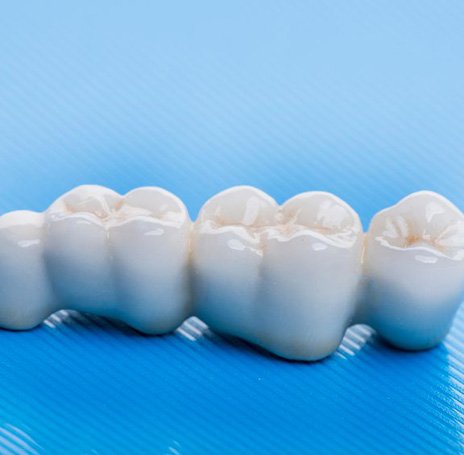
A dental bridge is a prosthetic device consisting of one or several artificial teeth suspended between two dental crowns placed on healthy teeth or two dental implants surgically inserted into the jawbone. These appliances can be made from metal or ceramics, and they are used to restore one or more sequential missing teeth. A suitable candidate for a dental bridge will be free from oral infections such as tooth decay and gum disease, but we will be happy to address these issues at our Rock Hill office so a patient can become an excellent candidate later. If the patient wishes for an implant bridge, they will also need jawbones strong enough to support implants, so we may have to refer them to a specialist for bone grafts if their jaws are too thin.
Types of Dental Bridges

The right type of dental bridge for you will depend on your budget, preferences, and the state of your oral health. After examining your mouth during your consultation, our dentist may recommend:
A Traditional Dental Bridge

A traditional dental bridge is supported by dental crowns placed on the healthy teeth on either side of the gap created by tooth loss. While the process of placing one of these devices will require the permanent alteration of healthy teeth, a traditional bridge can be an affordable and effective way to achieve a complete smile.
An Implant Bridge
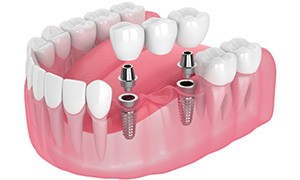
An implant bridge is supported by two dental implants surgically placed in the jawbone. This allows the restoration to exert superior chewing power and last much longer than traditional devices while eliminating the need for alteration of healthy teeth. While dental implants are not cheap, they can last for decades or possibly a lifetime if they receive excellent care.
The Benefits of Getting a Dental Bridge

Neglecting to replace lost teeth can lead to a host of oral and overall health issues. A dental bridge can prevent these by:
- Supporting the remaining teeth to prevent dental drift
- Improving the patient’s chewing ability
- Making it easier for the patient to speak clearly
- Sheltering the gums from injury
- Enhancing the patient’s confidence by giving them a complete smile
If you’d like to learn more about how a dental bridge can help you, please feel free to schedule a consultation at our office in Rock Hill.
Dental Bridges FAQs
Are Dental Bridges Removable?
Many patients have heard providers referring to partial dentures as ‘removable bridges,’ leading them to wonder whether their restoration is intended to be frequently removed and reinserted.
However, these are two very different treatments. Partial dentures rely on metallic clips to anchor to healthy teeth in your mouth and can be taken out to clean all surfaces. Meanwhile, dental bridges are cemented to healthy abutment teeth or attached to implants on either side of the gap in your grin and aren’t intended to be taken out except by a professional, like one of our providers in Rock Hill.
What are Dental Bridges Made From?
Historically, dentists provided replacement teeth made of amalgam, a mixture of metals known for its resilience. Although they withstand the pressure of daily biting and chewing, metallic restorations can detract from your appearance or contribute to allergies or sensitivity.
Today, our team in Rock Hill provides lifelike dental bridges made from durable ceramic that reflects light like enamel. This material can also be customized to match the shade, size, and shape of your natural teeth for seamless results that boost your confidence. Not only that, but they often last 10 to 15+ years if cared for correctly, which is often as long as their metallic counterparts.
Does It Hurt to Get a Dental Bridge?
Many patients avoid scheduling procedures that they worry might hurt, and getting a dental bridge is no exception. It’s natural to feel nervous, but our team will do everything we can to help put you at ease.
For example, we’ll numb your teeth before preparing them by removing a small amount of enamel from the abutment teeth for your restoration to fit correctly. This can cause temporary sensitivity afterwards, but it usually fades after a few days and can be safely mitigated with over-the-counter medications, such as ibuprofen or acetaminophen.
Patients receiving an implant bridge can expect to feel aches and inflammation as they recover from surgery, though this usually peaks around the third day then gradually subsides.
How Long Do Dental Bridges Usually Last?
Usually, dental bridges can be expected to last between 5 and 15 or more years, though their lifespan depends significantly on your unique circumstances and habits. Typically, you can help them last longer by:
- Implementing a twice-daily dental hygiene routine. Brushing and flossing regularly removes plaque and bacteria that cause cavities and gum disease, which can cause your new teeth to fail.
- Choosing foods carefully. Avoiding overly sticky, deeply toned, hard, and crunchy foods can prevent chips, cracks, and stains that can harm your restoration.
- Avoid bad habits. If you anxiously nibble fingernails or pen caps or smoke regularly, you’re more likely to damage your new teeth, which can destabilize or dislodge them.
- Visit us for routine checkups. Seeing our team every six months for a standard exam and cleaning allows us to catch and treat any potential areas of concern before they harm your bridge.