

Gum Disease Treatment Rock Hill
Keeping Your Gums Healthy with Expert Care

While your gums may not receive as much attention as your teeth do, they’re still important to the health and appearance of your smile. Your gums play an important role in supporting your teeth, but their health can also affect your overall well-being. Gum disease, also known as periodontal disease, can contribute to various oral and overall health problems. Thankfully, Drs. Ross and Sourlis offer expert gum disease treatment in Rock Hill, SC to address gum disease and prevent it in the future.
Why Choose Ross & Sourlis Family Dentistry of Rock Hill for Gum Disease Treatment?
- State-of-the-Art Laser Treatments
- Gentle, Thorough Scaling and Root Planing
- Experienced, Caring Dental Experts
What Is Gum Disease?

Gum disease is an infection and inflammation of your gums and supportive tissue. This disease is usually caused by plaque and tartar buildup resulting from poor oral healthcare. The earliest stage, gingivitis, typically shows up as bleeding, puffy, tender, or red gums. This stage can be completely reversed by a good oral healthcare routine and regular visits to our dental office for checkups and cleanings. Call our dental office today if you notice any of these symptoms:
- Red or puffy gums
- Gums that bleed when brushing or flossing
- Teeth that appear longer
- Persistent bad breath
- Change in your bite
- Loose teeth
Why Is Gum Disease So Serious?

While the mild symptoms that are caused by gingivitis can be reversed, if left untreated, gum disease can cause damage to your gums, supportive tissue, and even tooth loss. Additionally, gum disease has been linked to an increased risk of overall health problems like cardiovascular disease, stroke, diabetes, cancer, and Alzheimer’s. The sooner you can schedule an appointment for treatment, the more likely you are to avoid some of these more serious health risks.
Understanding Gum Disease Treatment
Our dentists offer three different options for gum disease treatment in Rock Hill:
Antibiotic Therapy

We will typically recommend antibiotic therapy to patients in addition to scaling and root planing for a more comprehensive treatment. It can be administered through oral medication or topical gel that is applied to your gums. These antibiotics reduce gum disease-causing bacteria in your mouth even when you’re outside of our dental office.
Laser Dentistry

Thanks to modern dentistry, our expert dental team can use a soft tissue laser to treat gum disease. Using a precise beam of light, one of our dentists can remove infectious bacteria and eliminate diseased portions of your gum tissue. This state-of-the-art technology offers a way to receive treatment without the uncomfortable dental tools that are typically used. Laser dentistry is so comfortable that most patients don’t need local anesthesia during treatment. Plus, the laser’s sterilizing qualities keep your bleeding and swelling to a minimum for a quick and easy recovery.
Scaling & Root Planing
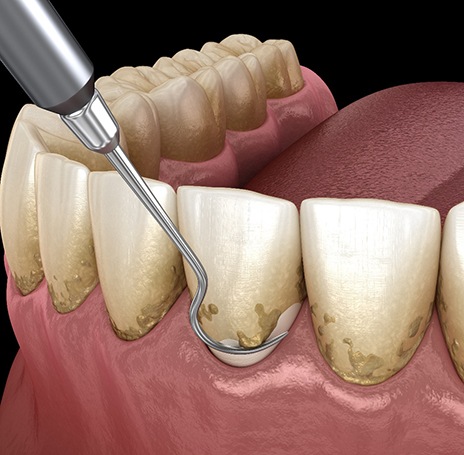
Plaque and tartar buildup above and below the gumline can increase your risk of cavities and gum disease. With scaling and root planing, your dentist can remove this sticky substance from your teeth, reducing the presence of oral bacteria and making way for your gums to healthily reattach to your teeth once they are infection free.
Do I Need Scaling & Root Planing?

Although the earliest stage of gum disease, gingivitis, can sometimes be reversed with improved oral hygiene, if your condition has advanced to periodontal disease, you may need a gum disease treatment in Rock Hill called scaling and root planing.
Scaling and root planing is a safe, effective treatment for patients who are currently suffering from symptoms of gum disease, including bleeding while brushing and flossing, receding gums, persistent, bad breath, swollen or inflamed periodontal tissue, and visible plaque buildup on the teeth.
The Process of Scaling & Root Planing
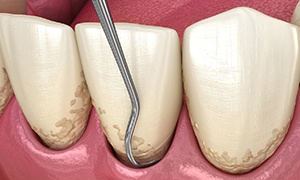
Scaling and root planing is a very in-depth process and is typically spread out over the course of two separate dental appointments.
During your first visit, your dental team will use a device called a scaler to remove the deposits of plaque and tartar from the surface of your teeth, reaching as far down as your periodontal pockets. Then, you’ll return once more to have the roots of your teeth planed. To do this, your dentist will first remove the hardened deposits of bacteria from below the gumline, eliminating further infection and preventing bacteria from repopulating in your periodontal tissue. Then, once clear, your gums will naturally reattach and protect the roots as they were designed to do.
Aftercare Tips for Scaling & Root Planing

Because scaling and root planing can be an intensive gum disease treatment in Rock Hill, it may take a few weeks for your mouth to completely recover. During this time, it is normal to feel an increase in sensitivity and discomfort. Here are a few aftercare tips to help make healing more manageable:
- After each meal, swish some warm saltwater in your mouth. This will help reduce irritation and make it easier to brush and floss your teeth. Saltwater can be made by mixing ¼ teaspoon of salt to every eight ounces of water.
- Only use a soft-bristled toothbrush, as this will reduce your risk of irritation and bleeding. Brush slowly, and use small, gentle, circular motions.
- For the first 48 hours, stick to a soft, non-abrasive diet.
- Do not perform any strenuous physical activity for 24 to 48 hours after each appointment, as this can divert the blood away from your gums and slow down the healing process.